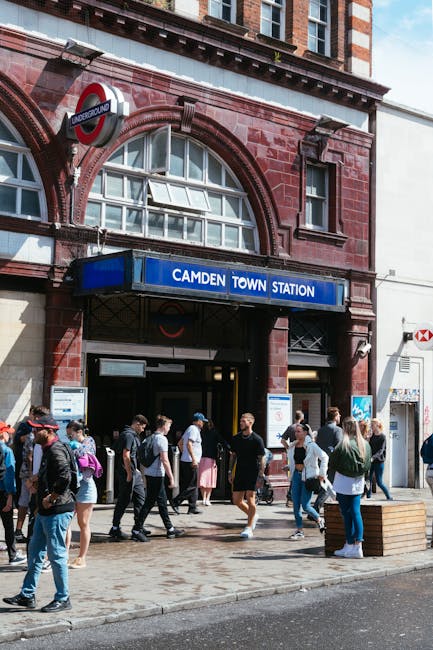
Camden Council permit rules for Kentish Town moving vans
Posted on 07/07/2026
Camden Council permit rules for Kentish Town moving vans: a practical local guide
If you are moving in Kentish Town, the parking side of the job can be more stressful than the sofa or the boxes. Camden streets are busy, bays fill quickly, and a van that looks "small enough" can still get caught out by loading restrictions, yellow lines, or residents' bays. That is why understanding Camden Council permit rules for Kentish Town moving vans matters before moving day, not after the driver is circling the block with the clock ticking.
This guide explains the rules in plain English, how moving-van permissions usually work in practice, where people slip up, and how to plan a smoother move in NW5. It is written for real-life moving situations, not office-perfect theory. Truth be told, one badly timed parking decision can throw the whole day off.
For broader moving help, you can also explore our services overview or read more on the Kentish Town road removals guide for narrow access if your street is tight, busy, or awkwardly parked-up.

Why Camden Council permit rules for Kentish Town moving vans Matters
Kentish Town is one of those places where the map makes things look simple and the street tells a different story. A road may seem fine for loading, but once you are there you find narrow carriage space, a busier flow than expected, a line of parked cars, or a loading bay already occupied. If your moving van is not allowed to stop where you planned, the whole removal can become slower, more expensive, and a lot more tiring.
Camden Council permit rules exist to manage traffic, protect parking availability, and reduce disruption for residents and businesses. For a mover, the practical effect is straightforward: you need to know whether the van can stop, for how long, and under what conditions. Some moves are fine with standard loading discipline; others need a specific parking suspension, a dispensation, or another form of permission depending on location and timing.
Why does this matter so much? Because moving day already has enough moving parts. Boxes go missing. Someone forgets the kettle. The lift is slower than expected. If the van then has to park three streets away, you are suddenly carrying furniture further than planned. Not fun. And on a wet London morning, it is even less fun.
This is also where planning ties into the rest of the move. If you are arranging a flat move, for example, you may want to pair parking planning with flat removals in Kentish Town, while larger household moves may be better supported through house removals Kentish Town. The parking arrangement should match the size and pace of the job, not just the postcode.
How Camden Council permit rules for Kentish Town moving vans Works
The exact permission you need depends on the street, the type of parking restriction, the vehicle size, and how long the van needs to stay. In practice, moving vans in Camden may need one of a few things:
- a legal loading space that can be used without special permission;
- a parking bay suspension or temporary restriction change;
- a permit or dispensation for limited stopping time;
- advance coordination with building management or a concierge where access is controlled.
That sounds a bit bureaucratic, and yes, sometimes it is. But the logic is simple: if the van is going to occupy a space that is normally reserved, time-limited, or controlled, the booking needs to fit the rules.
In Kentish Town, the biggest practical issue is often not the legal concept itself, but the street reality. A road might allow short loading in theory, yet still be too narrow for a large Luton van to sit safely without blocking traffic. A smaller removal van or a carefully planned man with a van in Kentish Town service may be easier to position, especially where access is tight.
Here is the rule of thumb most people miss: a permit does not magically create space. It only authorises use of space under certain conditions. If the van is too large, or the street is full, or the timing clashes with school runs or peak traffic, a permit alone will not solve the problem. You still need a realistic loading plan.
In some situations, people also need to think about entry and exit timings. For example, a same-day move may require a tighter schedule and more careful parking coordination. If that sounds like your day, have a look at same-day removals Kentish Town so the parking plan and the moving plan work together, not against each other.
Key Benefits and Practical Advantages
Getting the permit side right does more than avoid a ticket. It makes the whole move calmer and more efficient.
- Less wasted time: the van can park closer to the property, which cuts down loading and carrying time.
- Lower stress: you are not improvising on the street while furniture is waiting on the pavement.
- Better safety: fewer long carries mean less risk of damage to items, walls, or ankles. Ankles always seem to go first, somehow.
- Cleaner communication: everyone knows where the van can stop and for how long.
- Fewer surprise costs: delays caused by parking issues often become labour costs, overtime, or rescheduling headaches.
There is also a more subtle benefit: confidence. When the driver knows the bay is sorted and the route is feasible, the job feels organised from the start. That matters, especially on busy streets where the sight of another van double-parked can make you regret not planning earlier.
If your move includes bulky items or fragile pieces, you may also want to look at furniture removals in Kentish Town or even piano removals in Kentish Town, because awkward items usually demand even better access planning.
Who This Is For and When It Makes Sense
This topic matters to more people than you might expect. You do not need to be moving a whole house for parking rules to matter.
It makes sense if you are:
- moving from a flat on a busy Kentish Town street;
- using a van that needs to stay close to the property during loading;
- moving into or out of a controlled parking zone;
- working to a tight time window, such as a handover or key collection;
- moving office items, event equipment, or larger loads;
- using a larger vehicle that may not fit neatly into casual loading space.
Students moving out of shared accommodation often underestimate this. Then they end up with a pile of boxes, a parking warden nearby, and a friend saying "it should be fine" in a tone that is almost never fine. If that sounds familiar, student removals in Kentish Town can be a useful option because student moves tend to need speed, flexibility, and a sensible curb-side plan.
Commercial moves are different again. Office clearance, archive boxes, monitor stands, and desks all add time and shape to the job. For those moves, office removals Kentish Town is often the better fit, because the parking issue has to sit alongside building access, lift bookings, and staff schedules.
Step-by-Step Guidance
- Check the exact street and access conditions. Don't rely on memory. Look at the road itself, the bay markings, and whether there are signs for loading, waiting, or controlled parking.
- Work out the vehicle size early. A small van and a larger removal van are not the same thing. If you think you might need extra capacity, say so before the booking is locked in.
- Decide whether permission is needed. If the van will need a reserved bay, a suspension, or special stopping rights, build that into the plan well ahead of the move.
- Set the loading window realistically. A one-hour plan often turns into two once stairs, lifts, or wrapping are involved. Be fair to yourself here.
- Coordinate with the property side. Building managers, neighbours, and residents can all affect the move. A gate code or lift booking missed by ten minutes can create a silly amount of delay.
- Confirm the backup plan. If the first bay is blocked, where will the van go? If the road is full, what is the nearest legal alternative?
- On the day, keep the front of the move clear. Boxes near the door, fragile items apart, and the driver briefed before unloading starts. That small bit of order saves a lot of wandering back and forth.
One practical detail that people often miss: if your move includes both packing and transport, good prep matters just as much as the parking permission. A tidy handover at the door can shave real time off the job. See packing and boxes in Kentish Town for a better-organised move.
Expert Tips for Better Results
After enough local moves, you start to notice patterns. The smooth ones rarely happen by accident.
1. Plan around the street, not the postcode.
Kentish Town sounds compact, but each road has its own quirks. A street with wider carriageway space can still be awkward if it is heavily parked or has awkward sightlines. If you are moving near a particularly tight road, a guide like Fortess Road man and van tips for flats and stairs is useful because it reflects the real shape of local access problems.
2. Choose the right vehicle.
People often think "bigger is better" until the bigger vehicle cannot stop neatly near the entrance. A smaller van with a well-planned shuttle can beat a bigger vehicle that sits too far away. No drama, just logistics.
3. Start early when you can.
Morning moves often give you more flexibility. Less traffic, fewer double-parked cars, and more chance of a legal space being available. Not always, of course, but often enough to matter.
4. Keep the job margin a little generous.
To be fair, most moves take longer than someone expects. Give yourself breathing room, especially if the van permit window is tight or your street tends to clog up around school drop-off and late morning deliveries.
5. Match the parking plan to the service type.
For lighter jobs, a man with van Kentish Town arrangement may be enough. For larger family moves, a more structured removals Kentish Town service is usually the safer choice.
If you want to compare service styles more broadly, the services overview is a helpful place to see what is available before you commit.
Common Mistakes to Avoid
- Leaving parking until the last minute. This is the big one. People sort the boxes and forget the bay.
- Assuming "loading" means anything goes. It usually does not. Restrictions still matter.
- Booking the wrong vehicle size. A van that is too large can be more of a problem than a van that is slightly smaller.
- Ignoring building access rules. Some properties want move-in windows, lift booking slots, or concierge approval.
- Forgetting that Kentish Town streets can be busy at odd times. A quiet-looking road at 7am can become a different animal by 10am.
- Not telling the removals team about stairs, narrow hallways, or awkward corners. That kind of surprise usually slows things down.
There is also a hidden-cost angle here. Parking-related delays often become labour-related delays. If you want to avoid avoidable extras, it is worth reading how to avoid hidden removals charges in Kentish Town. That article sits nicely alongside permit planning because access problems and pricing problems tend to travel together.
Another common one: people book a service, then assume the company will sort every access issue without being told the street layout. That is optimistic, but not realistic. Good movers can plan well, yet they still need accurate details.
Tools, Resources and Recommendations
You do not need fancy software to get this right. A decent checklist, a phone camera, and a bit of local common sense go a long way.
- Street photos: take a few shots of the road, the bay, and the entrance so everyone is working from the same picture.
- Floor plan or room notes: especially useful for flats and narrow stairwells.
- Lift booking confirmation: if your building has one, keep it handy.
- Move-day contact list: driver, property contact, building manager, and anyone with access codes.
- Packaging materials: sturdy boxes, tape, wrapping, and labels so unloading does not turn into a treasure hunt.
For heavy or awkward items, a specialist service can be worth it. removal van Kentish Town options are useful when you need the right vehicle and a straightforward loading plan. If you are moving precious pieces, piano removals Kentish Town deserves extra care because time, access, and handling all matter more than they do with ordinary furniture.
There are also practical support pages for trust and reassurance. If you want to understand how a provider handles responsibility, take a look at insurance and safety and the company background on about us.
Law, Compliance, Standards, or Best Practice
Without turning this into a legal seminar, here is the safe way to think about it: parking and loading in Camden should be treated as a compliance issue, not a casual guess. The key point is to follow the local restrictions that apply to the street, respect signed loading rules, and avoid blocking traffic or pedestrian movement.
Best practice in the removals trade also means:
- making accurate statements about access and vehicle needs;
- planning around known restrictions rather than hoping for exceptions;
- keeping loading and unloading as efficient as possible;
- using properly insured transport and handled equipment;
- communicating clearly with the customer about timing and access limits.
If the move is commercial, there may be extra responsibilities around site rules, building management, and safe working practice. If you are moving delicate items, there is also a safety expectation around packing, lifting, and vehicle positioning. The practical standard is simple: plan early, state the limits clearly, and do not improvise where a permit or formal permission is needed.
On the compliance side, it is also sensible to keep an eye on contractual terms and service expectations. Pages like terms and conditions and health and safety policy exist for a reason. They help set the shape of a job before anyone starts carrying wardrobes down stairs.
Options, Methods, or Comparison Table
Not every move needs the same parking solution. Here is a simple comparison to help you think it through.
| Option | Best for | Strengths | Limitations |
|---|---|---|---|
| Standard loading in a permitted bay | Short, simple moves with easy access | Quick, low-friction, usually the least complicated | Only works if the bay is available and the stay is within the rules |
| Bay suspension or controlled permission | Moves needing guaranteed kerbside space | More certainty, better for larger items or timed deliveries | Needs more planning and may not suit last-minute jobs |
| Smaller van with shuttle loading | Narrow streets or restricted parking | Flexible, easier to place, less likely to cause obstruction | May require more trips and a bit more time |
| Full removals team with structured access plan | Large household or office moves | Better coordination, more handling support, smoother on moving day | Usually needs the most preparation |
If you are unsure which route fits your move, start with the property type and the road conditions. Then choose the vehicle and permission level after that. It sounds obvious, but people do it the other way round all the time.
Case Study or Real-World Example
A typical Kentish Town scenario goes like this. A renter is moving from a second-floor flat near a busy road. They have a few heavy boxes, a bed frame, a desk, and a couple of fragile kitchen items. At first, they assume the van can just stop outside for twenty minutes. Easy.
Then the street is busier than expected. One side is already packed with parked cars. The loading spot is limited. The van arrives, but the driver has to keep moving because there is no confirmed place to stay. The flat move suddenly becomes a carry-from-further-away job, which adds time and knocks the rhythm out of the day.
Now compare that with a better-planned version. The customer shares the road details in advance, the vehicle size is chosen carefully, and the load-in timing is arranged around the local parking situation. The team arrives, parks more cleanly, and starts moving boxes without that annoying first-half-hour scramble. The job still takes effort, of course. Moves always do. But the day feels controlled instead of chaotic.
That is the real value of planning around Camden Council permit rules for Kentish Town moving vans: not paperwork for paperwork's sake, but fewer delays, safer handling, and a move that does not begin with crossed fingers.
If your move is time-sensitive or you have already had delays elsewhere, a page like urgent same-day removals in Kentish Town can help you think through what a faster turnaround actually involves.
Practical Checklist
- Confirm the exact address and street layout.
- Check parking restrictions, loading signs, and any nearby bay controls.
- Choose the vehicle size based on the street, not just the load.
- Decide whether permission or a parking arrangement is needed.
- Tell the removals team about stairs, lifts, narrow entrances, or timing rules.
- Prepare boxes, labels, wrapping, and fragile-item protection early.
- Keep contact details for the property and building manager to hand.
- Build in extra time for traffic, loading, and access hiccups.
- Have a backup parking spot or short-walk plan if the first option is blocked.
- Confirm the final timing the day before, not just on the morning itself.
Small checklist, big difference. That is the honest version.
Get a free quote today and see how much you can save.
Conclusion
Getting to grips with Camden Council permit rules for Kentish Town moving vans is really about making the move more manageable. Once the parking and access picture is clear, everything else tends to fall into place more easily: loading, timing, safety, and the final handover. It is not glamorous, but it is one of the most useful parts of the whole move.
If you are moving within Kentish Town, into NW5, or across Camden streets that get tight at the worst possible moments, do not leave the permit question until the last minute. A little planning now can save a lot of running around later. And if the day still feels a bit full-on, that is normal. Most moves do. You will get through it.
For a smoother local move, you can also browse man and van Kentish Town, removal services Kentish Town, or pricing and quotes if you are comparing your options. And if you want to know more about the team behind the service, about us is there as well.